1. Depth first: stay inside the triangle
Diamond attempts concentrate deep because generation spans Y=-64..16 with a triangle profile. Farming “up high” wastes pickaxe durability on iron-tier odds. Anchor every session to Y=-59; if lava pools frequent in your biome, float to Y=-57 and mine the stack above you—still better than returning to legacy Y=12 habits.
Read the full probability story on density distribution so you know why buried veins vanish in open caves.
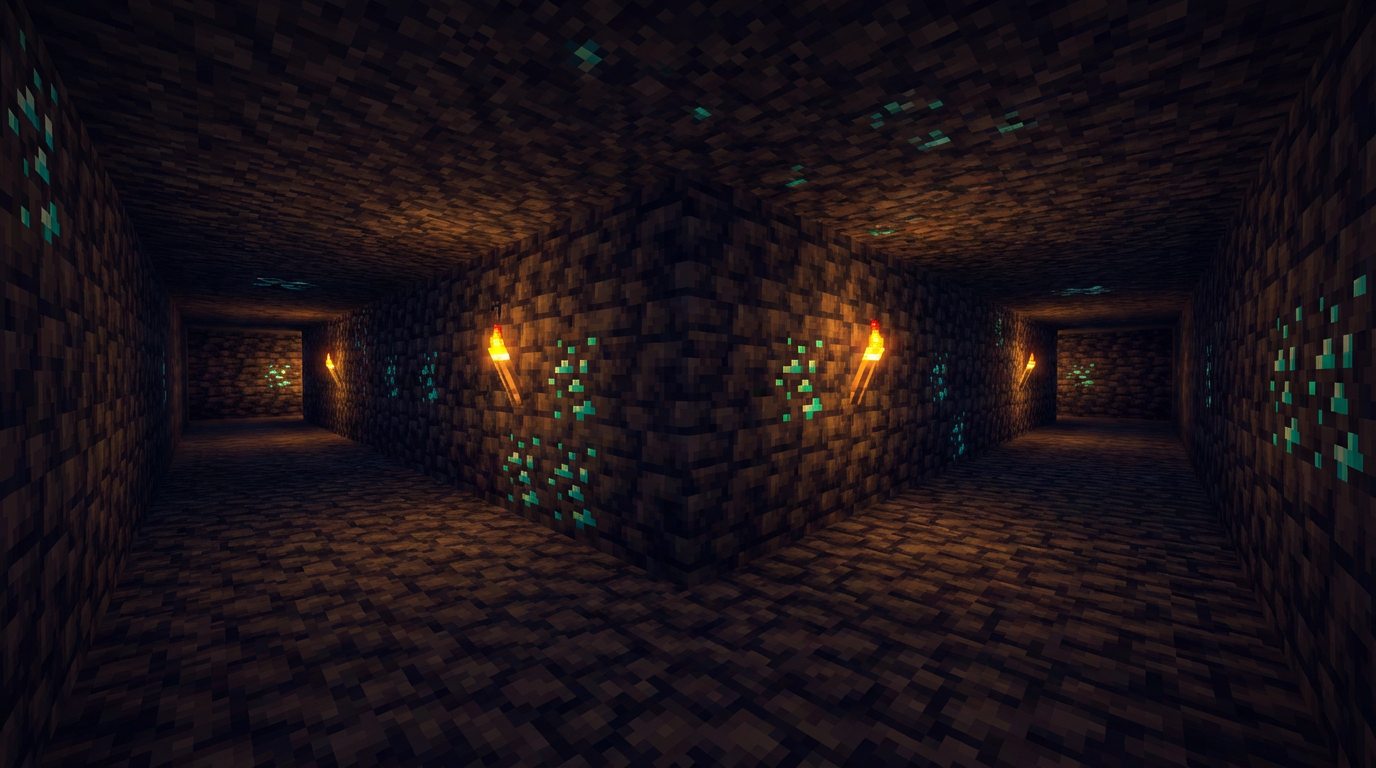
2. Branch mining layout at diamond depth
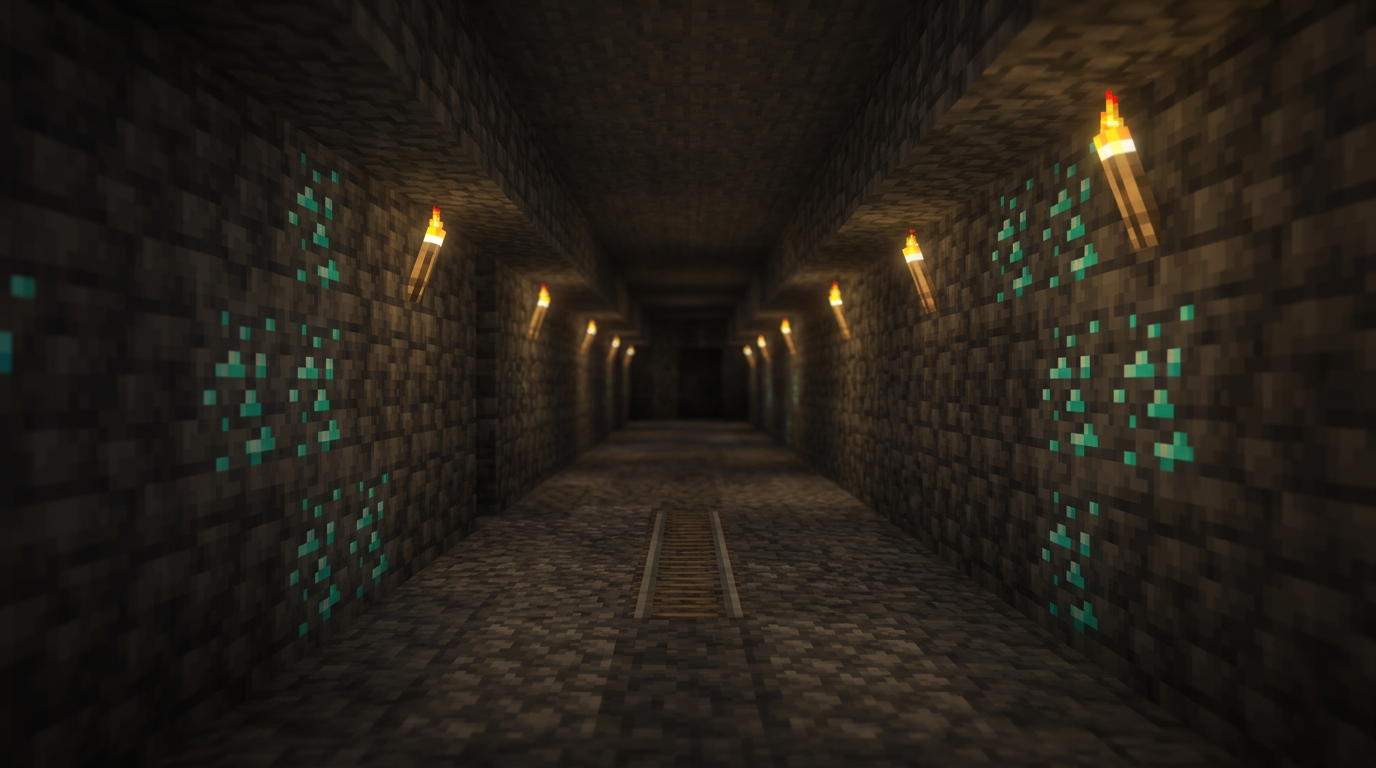
Dig a central spine, then side tunnels offset every two blocks. That spacing matches small vein widths (size 4, max five ore blocks) and medium footprints without duplicate faces. Light one wall consistently so you can sprint-scan for ore glints.
Carry water buckets, spare picks, and an emergency staircase; deepslate chewthrough increases as you widen tunnels. When you need volume instead of precision, switch tempo to strip mining at the same Y.
3. Cave routing vs. manufactured tunnels
Caves cost less durability when walls already expose ore, but air-discard rules trim some buried placements. Use natural caverns as connectors between manufactured grids, not as your only strategy—especially if you need steady throughput for beacon materials.
Pair cave exits with the Seed Map when you also chase trial chambers or ancient cities on the same outing.
4. Fortune III, Silk Touch, and depot smashing
Carry a dedicated Fortune III pick for any diamond ore you intend to break immediately. Average yield is about 2.2× with a hard cap of four gems per ore. A Silk Touch pick lets you shuttle ore blocks to a secure vault for later mass-processing after you repair or swap gear.
Enchantment math and bookshelf setups live in Fortune guide—keep this page focused on movement and layout.

5. Using the Ore Finder in farming loops
Paste your Java seed into the Ore Finder, enable the diamond layer, and look for dense highlight ribbons. Extend your branch spine toward those clusters before you mine blind chunks—especially on large multiplayer maps where travel time dominates.
Seed planning complements, not replaces, solid Y discipline: always verify depth with F3 before you celebrate surface coordinates.
6. Lava, beacons, and sustainability
Lava lakes concentrate below about Y=-54; staying near Y=-57 trades a sliver of density for fewer surprises. When you unlock Haste II beacons, clearing a full layer (strip mining) multiplies blocks cleared per minute—ideal before a major build season.
Mending plus Unbreaking III on your main picks keeps the loop stable; stash backup gear in an on-site chest so death drops never end the grind.
Farming Checklist
- Depth: Hold near Y=-59; shift to Y=-57 if lava dominates.
- Spacing: Branch tunnels every two blocks off the spine.
- Drops: Fortune III averages 2.2 diamonds per ore (max 4).
- Planner: Aim corridors with the Ore Finder + Java seed.